Master Deep Learning, Neural Networks, Computer Vision (YOLOv8/OpenCV), Transformers, Large Language Models (LLMs), RAG architectures, Agentic workflows (LangGraph), and MLOps deployment through practical labs, enterprise case studies, and mentor code reviews.
Meet our lead AI & MLOps Engineer in Pune. Experience our live coding approach and receive an honest career roadmap.
Most courses teach toy API wrapper tutorials. At Two Dimension Institute, you build real AI systems from neural network weights up to multi-agent production orchestration, latency optimization, and Docker microservices.
Implement neural networks from mathematical equations. Custom tensor operations, computational graphs, autograd backpropagation, custom loss functions, and learning rate schedulers.
Real-time perception pipelines. Convolutional Neural Networks (CNNs), ResNet feature extractors, YOLOv8 real-time object detection, OpenCV image processing, and video stream inference.
Master attention mechanisms. Multi-Head Self Attention, Positional Encoding, BERT embeddings, Hugging Face pipelines, tokenization, and domain fine-tuning for semantic tasks.
Build enterprise knowledge engines. Dense vector embeddings, ChromaDB/FAISS vector stores, hybrid semantic search, document chunking, context injection, and hallucination reduction.
Move beyond single prompts. Build autonomous multi-agent systems with LangGraph and CrewAI: dynamic tool calling, planning loops, stateful memory persistence, and human-in-the-loop review.
Deploy high-throughput AI microservices with FastAPI, Docker containers, ONNX runtime optimization, batch inference, GPU acceleration, and automated evaluation guardrails.
Designed for engineers and ambitious builders who want to create tangible, production-grade AI systems rather than superficial ChatGPT prompt wrappers. We build systematically from core principles.
Developers with backend, frontend, or full-stack experience in Python, Java, JavaScript, or C# looking to pivot into high-paying AI Engineering and LLM application architecture.
Graduates from B.E, B.Tech, BCA, MCA, or M.Tech looking to bypass generic services roles by entering the industry with verified PyTorch models, computer vision, and GenAI production projects.
Data specialists who want to upgrade from SQL and tabular Scikit-Learn into neural networks, computer vision, Transformer architectures, agentic LangGraph workflows, and MLOps.
Infrastructure engineers, cloud architects, and QA engineers who want to specialize in MLOps, AI containerization, model monitoring, and scalable GPU serving pipelines.
Basic familiarity with programming logic (in any language) and fundamental high-school algebra. Module 1 includes an intensive Python and tensor computing accelerator.
Any standard laptop with 8GB RAM (16GB recommended). Heavy model training, GPU acceleration, and LLM fine-tuning are conducted on cloud GPU environments provided during the course.
Every module is structured with neural network mathematics, live instructor coding, hands-on lab challenges, and a concrete production deliverable.
Master high-performance Python tailored for AI systems. Write memory-efficient vectorized operations, build custom OOP abstractions, and profile computational bottlenecks using cProfile and memory profilers.
Understand the exact mathematics that power modern artificial intelligence. Derive gradient descent, computational graphs, backpropagation, and loss surfaces without black-box abstractions.
Before jumping into deep neural networks, establish robust tabular baselines. Real-world AI engineers know when a tree ensemble beats a multi-million parameter neural network.
Build, train, and debug deep neural networks in PyTorch using industrial software patterns. Write custom Datasets, DataLoaders, modular training loops, and monitor loss convergence with TensorBoard.
Master computer vision from classical pixel processing with OpenCV to state-of-the-art real-time object detection and tracking using YOLOv8 and transfer learning.
Deconstruct the Transformer architecture from scratch. Master self-attention, multi-head projections, positional encoding, and tokenization that form the basis of all modern Large Language Models.
Move beyond basic API calls. Learn to run local open-source LLMs (Llama-3, Mistral) with Ollama and vLLM, implement structured output schemas, and master modern prompt engineering strategies.
Build enterprise-grade Retrieval-Augmented Generation (RAG) systems. Learn advanced document chunking, dense vector embeddings, hybrid BM25 + vector search, re-ranking, and hallucination reduction.
Move beyond linear chains into stateful, autonomous agentic architectures. Use LangGraph to build multi-agent systems that plan, call external APIs, evaluate their own outputs, and recover from failures.
Bridge the gap between model prototyping and enterprise deployment. Package models into Docker containers, build high-throughput FastAPI inference microservices, and defend your architecture before an industry panel.
No superficial tutorials. Every capstone gives you authentic real-world scale, production constraints, and requires full-cycle engineering execution that technical interviewers can inspect.
Train a custom YOLOv8 model to identify 6 classes of manufacturing surface defects on high-speed industrial assembly lines. Integrate OpenCV stream ingestion at 45+ FPS with live alerting.
Parse thousands of multi-page technical manuals and legal PDFs. Build a hybrid search pipeline combining BM25 keyword search with ChromaDB dense embeddings, followed by cross-encoder re-ranking.
Build a multi-agent system where a Supervisor agent delegates tasks between a Web Scraping agent, a Python Sandbox code execution agent, and a Synthesis Editor agent to create verified financial briefs.
Build an end-to-end audio pipeline using OpenAI Whisper for speech-to-text, followed by speaker diarization (PyAnnote) and LLM action item extraction with timeline chaptering.
Export trained deep learning models to ONNX runtime, build an asynchronous FastAPI microservice with dynamic batching, and containerize inside a production Docker image with health monitoring.
Implement a security proxy intercepting incoming user prompts to detect prompt injection, jailbreaking, and PII leakage before reaching base models, and filtering model outputs for toxic hallucinations.
Mastering AI Engineering requires rigorous implementation, mathematical clarity, and software discipline. Our offline classroom loop ensures every concept is tested and verified.
Visual, geometric walkthrough of loss functions, backprop gradients, self-attention, and tensors in Hindi/English.
Instructors live code on projector displays. Experience real debugging, PyTorch dimension alignment, and package fixes.
Apply each architectural pattern immediately in timed lab exercises designed to simulate technical interview tasks.
Senior AI mentors review your GitHub pull requests line-by-line, scrutinizing tensor vectorization, modularity, and tests.
Present and defend model trade-offs, inference latency, and system design in classroom viva sessions before AI practitioners.
Master AI architecture interviews: latency optimization, vector store scaling, token cost budgeting, and whiteboard design.
Certificates are awarded based on verified demonstration of skills, not mere attendance.
Getting hired as an AI Engineer requires demonstrable systems engineering capability. We prepare you across every stage of the technical evaluation pipeline.
Engineered with quantifiable impact metrics: model inference latency, mAP benchmarks, RAGAS scores, and architecture trade-offs.
Publish clean repositories complete with architecture diagrams, requirements.txt, Dockerfiles, and usage examples that engineering leads respect.
Simulated technical rounds: (1) PyTorch tensor coding, (2) Neural network mathematics viva, and (3) AI System Design whiteboarding.
Direct connection to our network of hiring partners, AI product startups, Pune/Bengaluru tech hubs, and alumni referrals.
In the Indian training landscape, institutes often use deceptive "100% Job Guarantee" slogans with hidden asterisks, or bundle non-technical telecalling jobs to claim high placement rates. We strictly reject these practices.
What we guarantee is uncompromising educational depth: an industry-grade curriculum, 350+ hours of rigorous classroom instruction, 6 production capstones, personalized 1:1 code reviews, and comprehensive interview preparation until you are placed. Your job offer is earned through your genuine skill, portfolio strength, and technical competence.
Our mentors are working artificial intelligence engineers who bring real production architectures, deployment pitfalls, and hiring standards into the classroom every day.
Former senior AI engineer at global tech labs. Architected real-time multimodal search pipelines, fine-tuned open-source LLMs, and deployed LangGraph agent systems serving enterprise clients.
Specializes in low-latency YOLOv8 object detection, OpenCV video pipelines, and packaging deep learning models into production Docker containers optimized with ONNX and TensorRT.
Conducts weekly technical mock interviews, reviews ATS resume drafts, evaluates GitHub code repositories, and tracks each student's career transition roadmap.
Here is an illustrative preview of the actual enterprise AI system complexity, agentic workflows, and engineering hygiene built during the 6-month bootcamp.
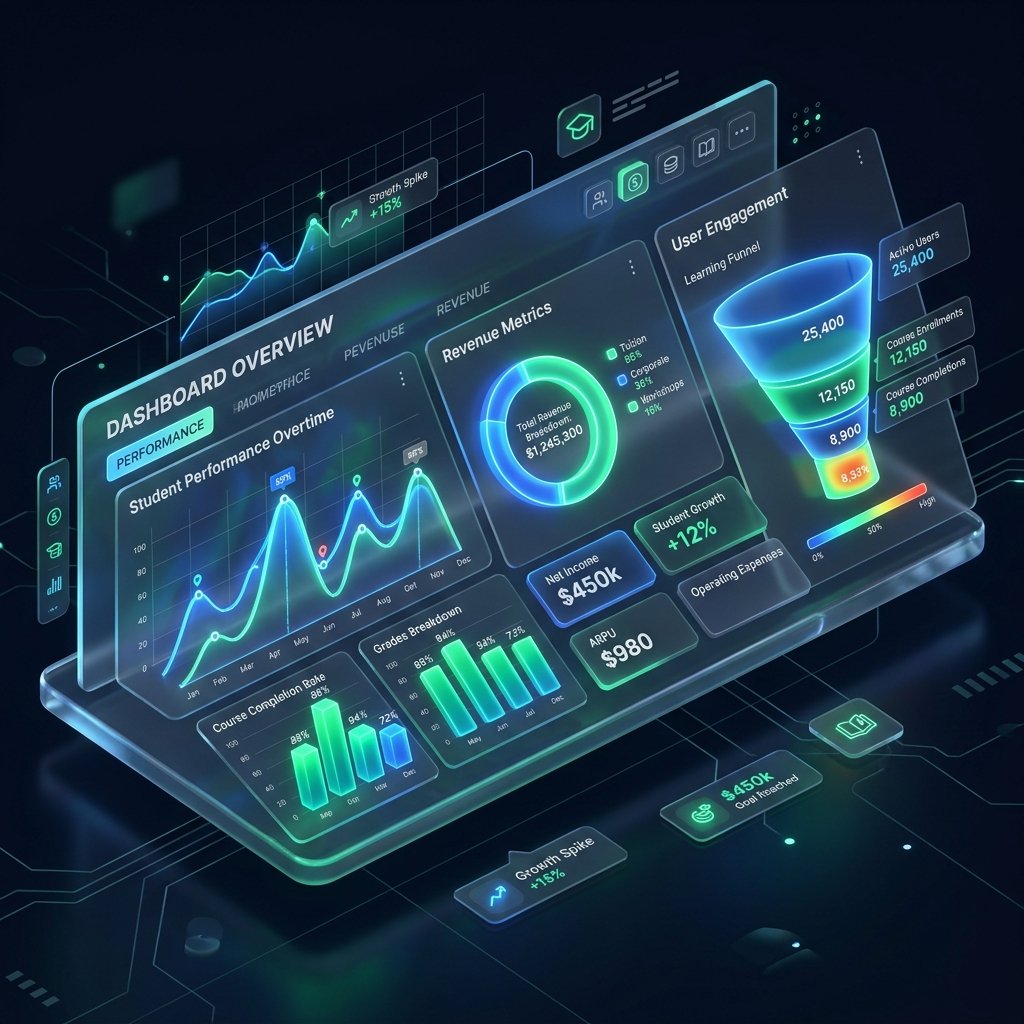
Fully interactive visual dashboard tracking live camera streams, real-time YOLOv8 bounding boxes, inference latency percentiles, and defect classification metrics.
When recruiters review your application, they won't just see a resume with buzzwords. They will inspect public, working evidence of your AI systems engineering:
Everything you need to know about the curriculum, classroom environment, mathematics prerequisites, and institute policies.
Reserve your seat for an upcoming in-person demo session in Pune. Experience our live coding approach, inspect student AI repositories, and receive a personalized learning roadmap.